


Monday’s Low Traffic Neighborhood Nerd Night made one thing clear: there is a real appetite in Western Queens for a different vision of city life.
Thank you to the organizers at 31st Avenue Open Streets, Transportation Alternatives, Open Plans, and 34th Ave Open Streets for making it a huge success! And of course to all those who came out!
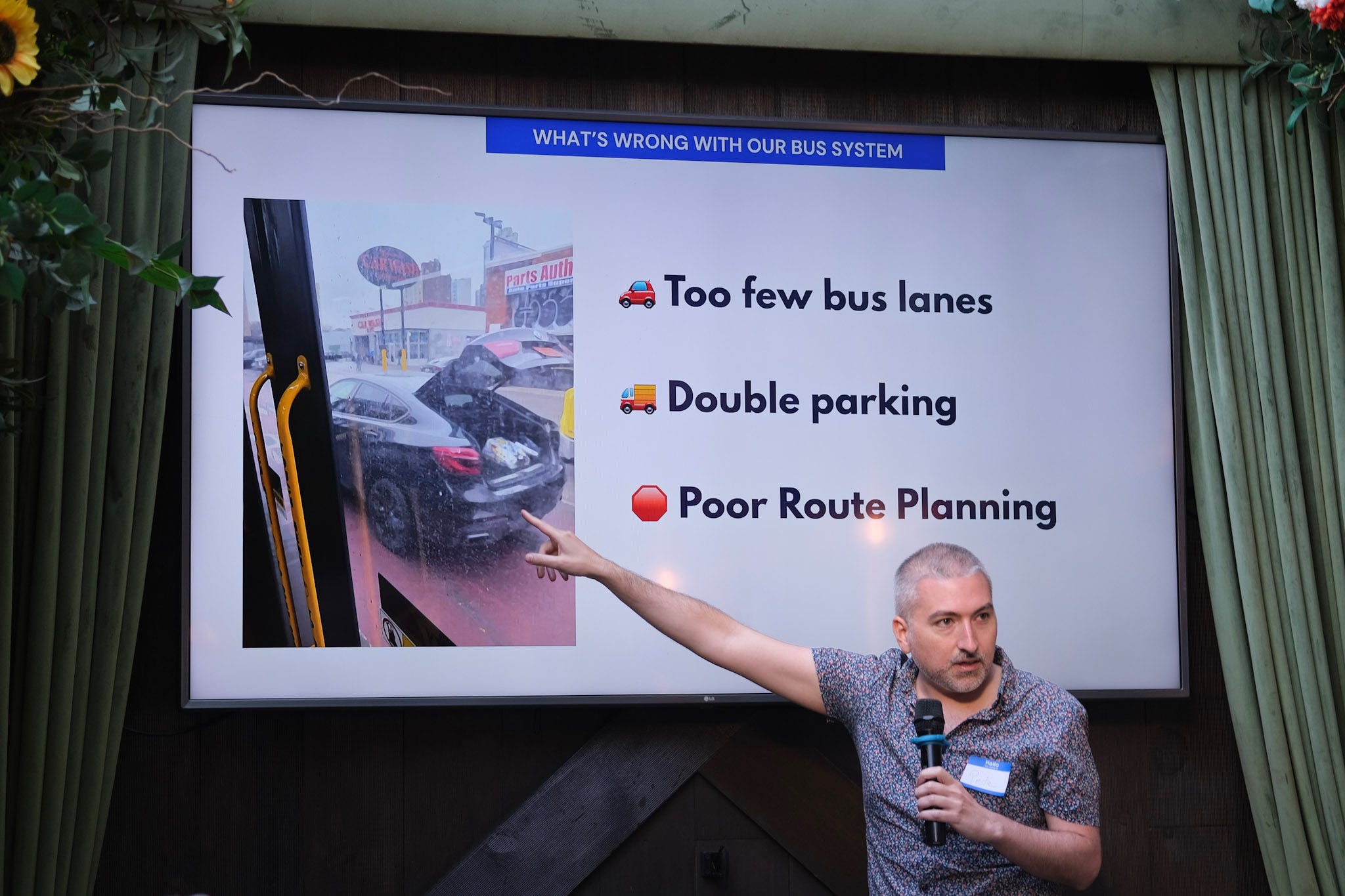
The author going off about blocked bus lanes at Nerd Night.
What started as a conversation about safer streets quickly became something bigger, a discussion about public space, accessibility, affordability, community, and what kind of city New York wants to become.
Because this isn’t just a fight about “more bikes” or “less cars.” It’s a fight over how we use the public space we already have and how we plan for the future of a growing city.
Queens alone has roughly 700,000 registered cars and just around 160 miles of bus lanes. Space is limited. Every curb, every street, every intersection becomes a question of priorities. Who is the city designed for?
And at the center of that conversation is transportation.
Study after study has shown that transportation access is one of the strongest predictors of economic mobility. In many cases, commute times are more closely tied to upward mobility than school test scores, household structure, or even crime rates.
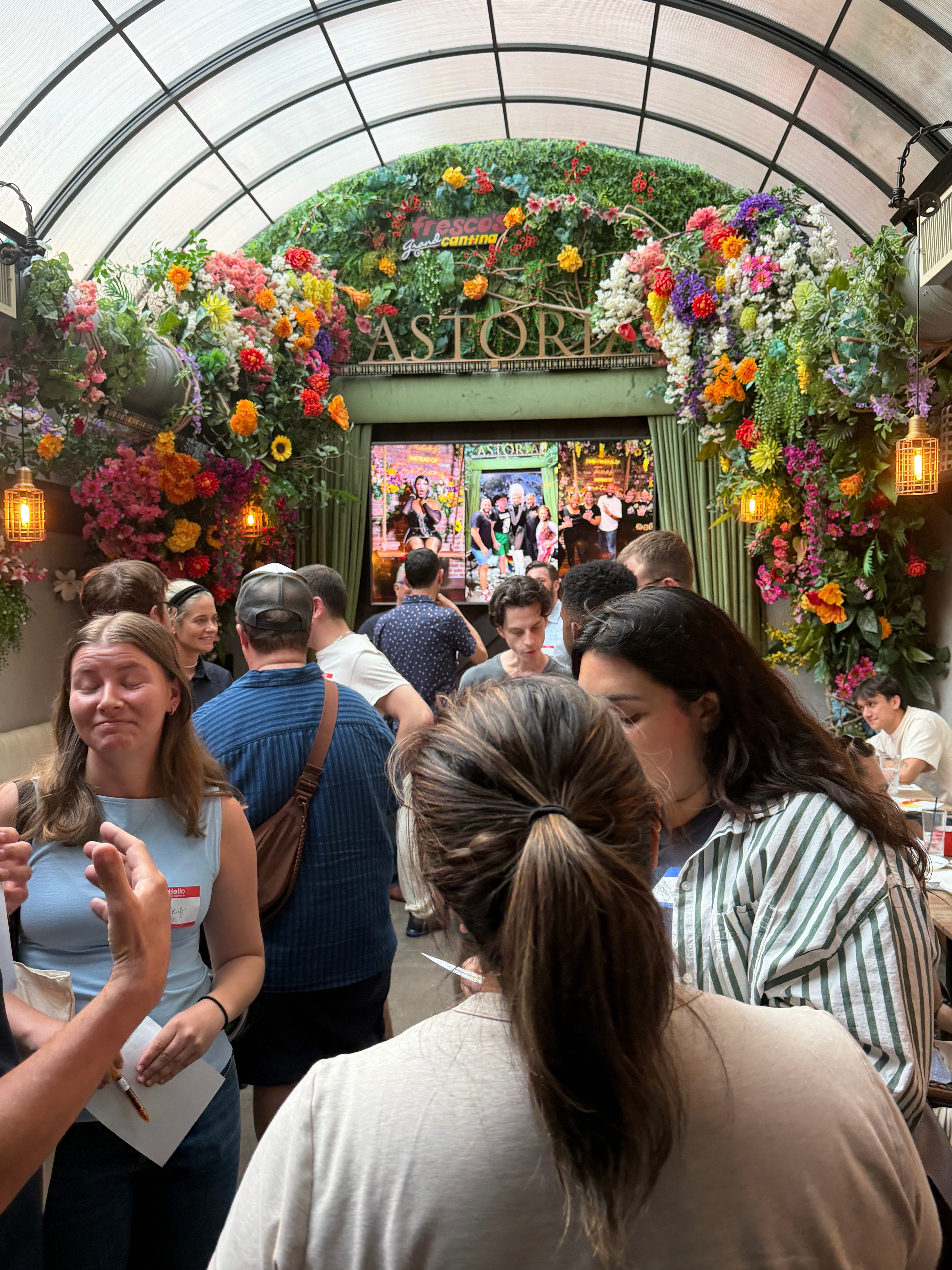
A big crowd turned out to learn about LTNs.
When commute times rise, economic opportunity declines. A city where people cannot easily reach jobs, schools, healthcare, parks, or each other becomes more unequal over time.
That’s why building better transit, safer streets, and more connected neighborhoods is not a niche issue. It is foundational to whether New York remains a city where people from anywhere can succeed.
And this conversation matters now more than ever.
For decades, New York has often treated growth, housing, transit, and public space as competing priorities instead of interconnected ones. But a progressive city is a city that builds! Builds housing, transit, public spaces, and infrastructure that expand opportunity rather than restrict it.
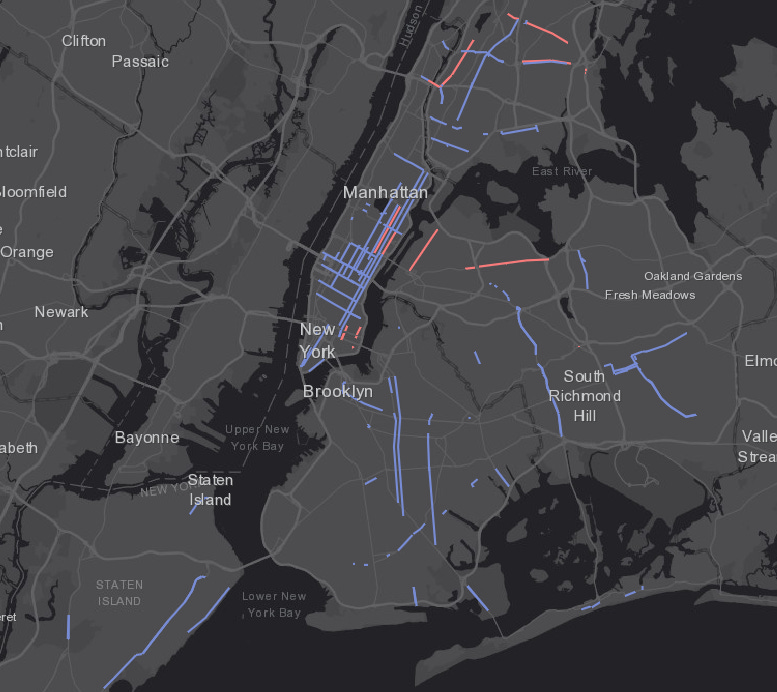
New York has only 160 miles of bus lanes out of a 6,000-mile street system.
The same principle applies to Open Streets and people-centered infrastructure.
A growing body of research has shown that Open Streets improve commercial corridors, increase foot traffic, support small businesses, and help neighborhoods remain economically vibrant. A New York City Comptroller report found that Open Streets were not only popular public spaces, but also economic assets for surrounding businesses and communities.
And perhaps most importantly, they create places where people actually want to spend time.
That energy was visible throughout the night. People weren’t just talking about policy; they were talking about their neighborhoods.
The success of this first Nerd Night showed something important: people are hungry for spaces to imagine a more livable, connected city together.
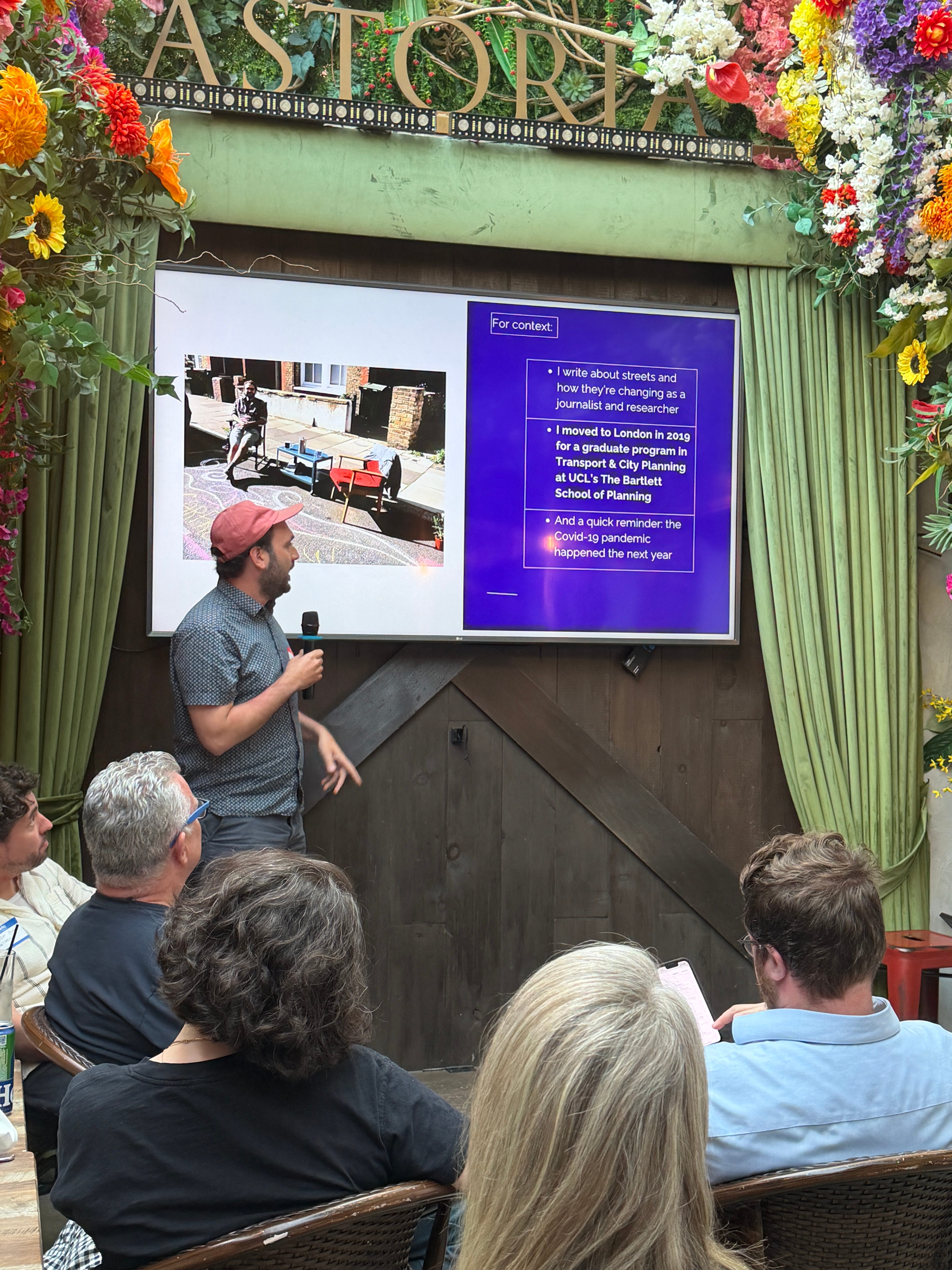
Our friends from 31st Ave Open Streets talking about London’s LTN’s
This is only the beginning. We’re hoping to make these conversations recurring events, partnering with our growing coalition of neighbors, advocates, planners, organizers, and residents who believe Western Queens can lead the way on building a more accessible and people-centered New York.
And we want more voices involved!
If you care about Open Streets, buses, safer intersections, better public space, housing, or simply making New York easier to live in, we’d love to hear from you. Civic Pulse is ultimately about building a movement of people who believe cities work best when they are connected, accessible, vibrant, and designed around human life instead of traffic.
Because the future of New York will not just be decided by politicians or planners.
It will be decided by whether communities are willing to organize around a vision for what this city can become.