


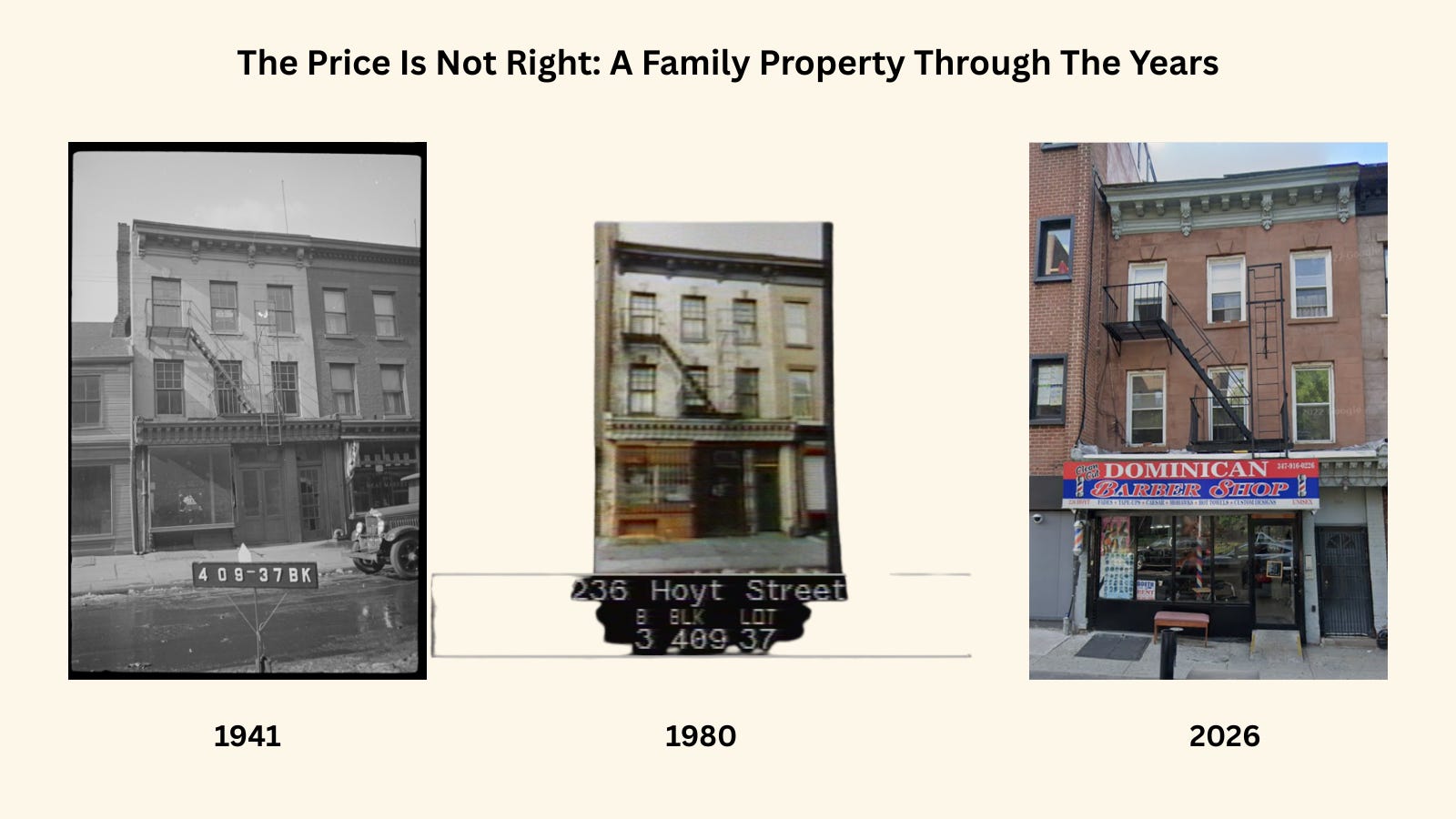
In 1982, a few years after my grandfather died, my family sold his store on Hoyt Street in Gowanus, Brooklyn. It is a three-story building with a store on the first floor and 2 apartments above. It sold for $84,000. Today, according to city tax documents, it is worth $2.9 million. That is New York’s housing crisis in one anecdote.
The financial history of my family’s store has become all too familiar: a generation of underbuilding paired with restrictive zoning has sent housing costs in New York skyrocketing. The median selling price for a home in New York now sits at over $800,000, a sum fewer and fewer New Yorkers can afford. Middle-class families are voting with their feet, threatening to turn our city from a melting pot into a museum. But New York’s affordability woes have one solution staring us in the face: turning millions of square feet of underused city-owned parking lots into affordable housing.
A Civic Pulse analysis of city tax data finds that New York owns 352 parking lots covering nearly 5.75 million square feet, or roughly 132 acres total. The parking lots would encompass 100 football fields. Of course, not every lot could or will be developed, but thousands of potential affordable homes could be built on these sites. Our analysis sought to isolate surface parking lots, which are easiest to develop, but it may have included a small number of garages.1
For a city that has a 1.3% rental vacancy rate and where 350,000 New Yorkers are homeless, those figures represent a profound juxtaposition. These lots should be housing New Yorkers, not just cars.
More than 75 percent—271 properties—of these parking lots are within a half mile of the subway. Those transit accessible properties occupy roughly 4 million square feet, and their current zoning provides approximately 8.6 million gross square feet of residential capacity.
Why does this matter? City-owned properties provide some of the best opportunities to build permanently affordable housing at scale. When the city develops its own properties, land costs are removed from construction balance sheets, allowing city subsidies to deliver more affordable units at lower rents. Plus, the city can mandate buildings remain permanently affordable and fast-track construction for subsidized housing.
I identified 42 highly developable parking lots that could become 6,000 homes under current zoning conditions2. That’s without any land-use changes. Those figures use a conservative assumption of 700 gross square feet per home and 20% of floor area reserved for other uses. Many of those sites sit next to transit and are severely underzoned. If we applied a minimum floor-area ratio (FAR) of 6 to the above scenario, we could build 9,200 homes. An ambitious FAR minimum of 8 would potentially yield 11,500 homes.
This is only a rough and hypothetical screening test; the screening tool excludes some parcels that make good development candidates and includes others that are not. Inevitably, properties will have legal or physical constraints that aren’t visible in citywide data. But this exercise was meant to push us to use our publicly owned land as an affordable housing portfolio and treat it as such. There’s a lot we could do!
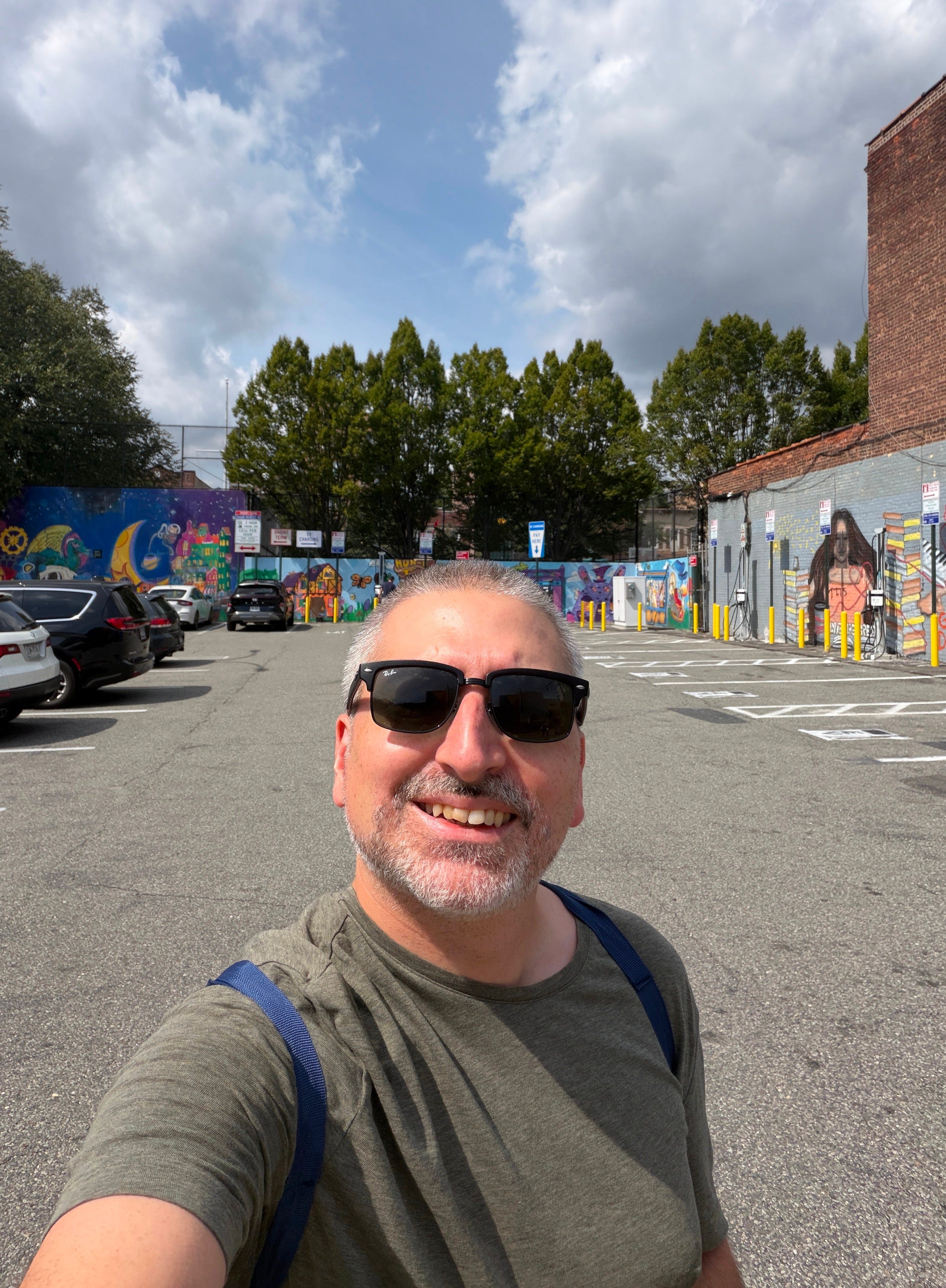
Queens Community Board 1 shows what’s possible. We could build hundreds of affordable homes here, and the neighborhood could serve as a pilot for a re-launched social housing program like Mitchell-Lama. CB1 has five surface parking lots totaling 100,000 square feet. The Department of Transportation owns all the surface parking lots, and they’re within walking distance of the subway.
Just look at the surface parking lot next to the Broadway N train stop. The site is 20,880 square feet; a similarly sized lot at 31-35 31st Street, just one block away, has 81 homes. If we matched that development’s zoning capacity, we could build 75-80 apartments on the current surface parking lot. The same goes for the surface lot next to the N train terminus; it’s 23,000 square feet. I could go on and on, but it’s almost beside the point.
Our analysis focused only on parking lots, but the city leases about 15,000 properties covering 2.2 billion square feet. The Mamdani administration has stated that New York must build 700,000 new homes over the next decade to lower prices. Developing city-owned properties is essential to this goal and should be the foundation of a new Mitchell-Lama social housing program. Mitchell-Lama was revolutionary for a generation of New Yorkers, delivering 105,000 affordable apartments for middle-class households3.
The Mayor recently announced the city would turn an underused NYPD parking lot into 131 affordable homes and committed to issuing at least five RFPs a year for housing on public sites. This is a good start, but if we’re serious about affordability and building 700,000 homes, we must scale this into a replicable, sustainable social housing program. Our next post will evaluate that more deeply.
Ultimately, this is a fight about how New York chooses to use one of our most valuable public resources: our land. And it is a test for the type of city we are and want to become. Will our housing and transportation policies put more effort into maintaining cheap space for cars while making it difficult to build homes for people? I hope not. Because if New York does not change how we grow, $2.9 million properties will become $10 million properties. And that’s the type of change our city can’t afford.
Our analysis used city tax data from PLUTO to try to isolate city-owned surface parking lots. This included properties classified as G6, G7, or Z2.
We defined high-viability parcels as those within 0.5 miles of transit, were at least 10,000 square feet, with a FAR > 1, and excluding properties managed by agencies where redevelopment would be difficult (FDNY, NYPD, Parks, etc.).
The Mitchell-Lama program financed new social housing between 1955 and 1981.