


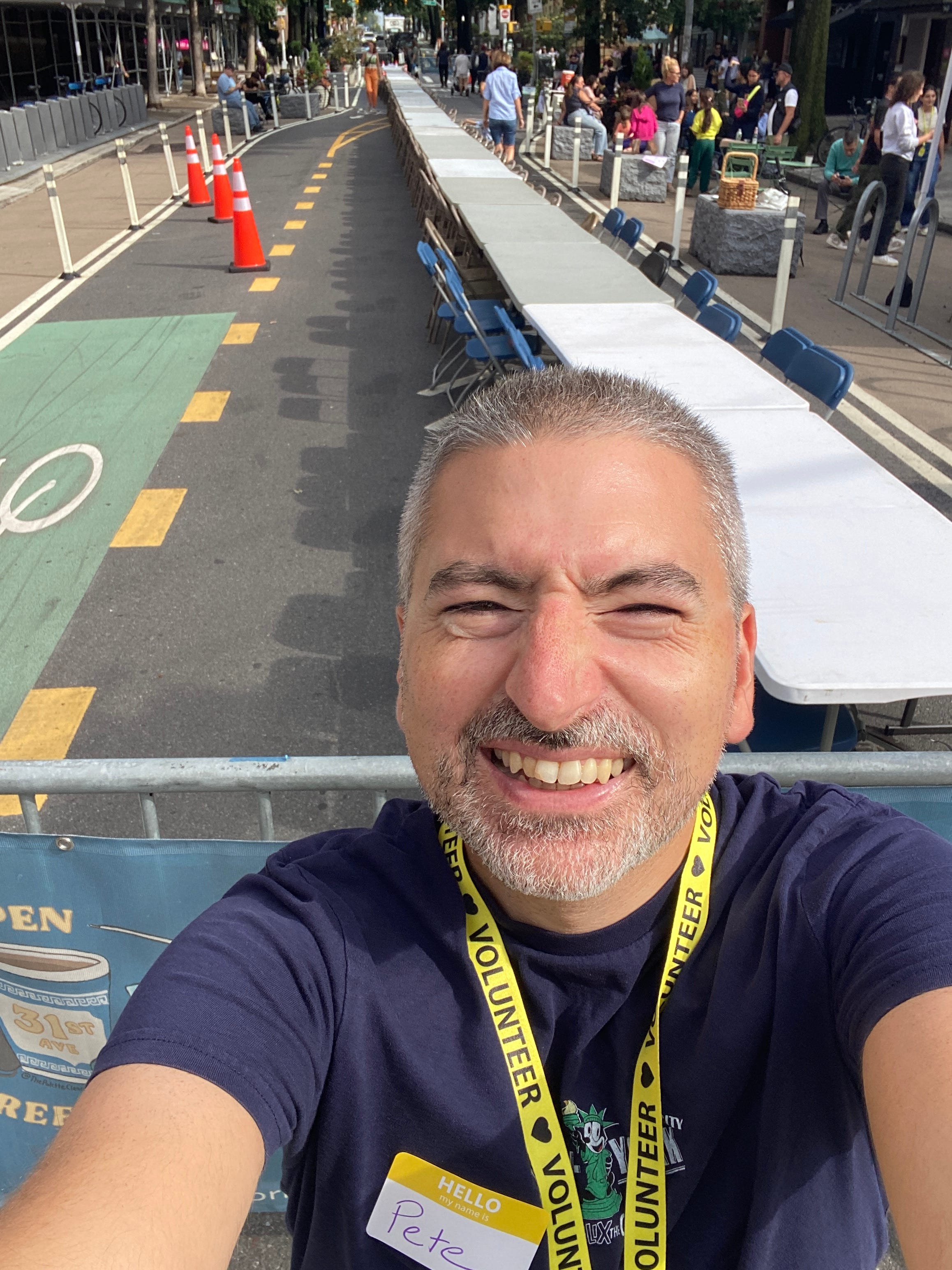
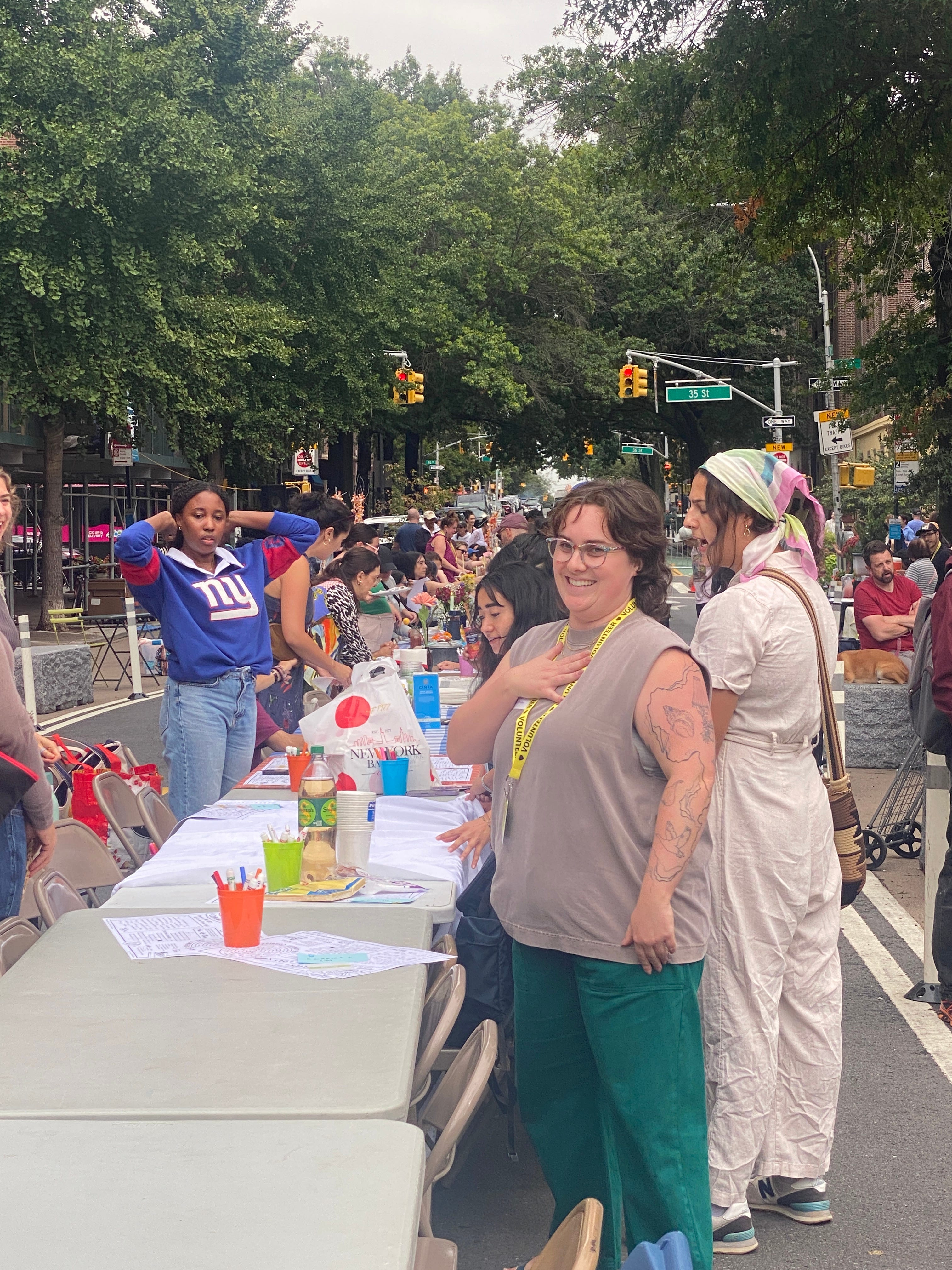
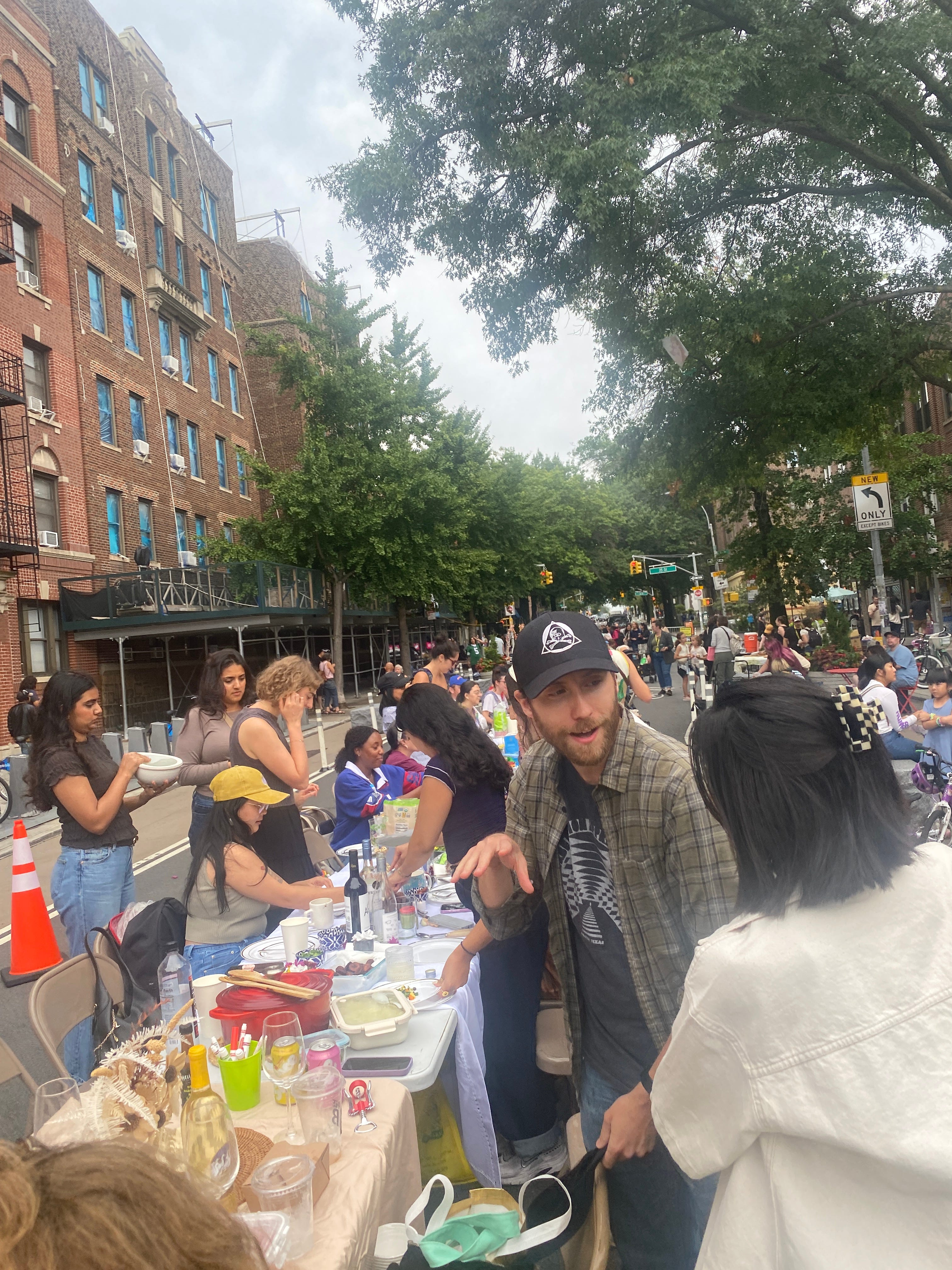
Neighbors gathering on the 31st Avenue Open Streets in Astoria to participate in the Longest Table, a giant potluck.
Open Streets As Town Center
I have found no easier way to meet people in New York than volunteering with the Open Streets program in my neighborhood of Astoria, Queens. From April through December, two blocks of 31st Avenue are pedestrianized each weekend, transforming into Astoria’s unofficial town center. What makes Open Streets so powerful is that it functions as civic infrastructure: a shared, low-barrier public space that strengthens community life in the same way libraries, parks, and schools do.
Neighbors, old or young, rich or poor, mix to watch movies, play cards, or attend potlucks. The Open Streets program demonstrates the power of reclaiming streets for people, not just cars. What’s happening on 31st Avenue is not unique to Astoria; similar transformations have taken place on Open Streets across the city.
With a new mayor and new councilmembers coming into office, now is the time to expand the program and make Open Streets a defining feature of New York City life.
A Simple Idea With Outsized Impact
The history of the Open Streets program shows what’s possible when decision-makers think outside the box. Simple ideas can have profound impacts. During the pandemic, policymakers and activists worked to pedestrianize public space to boost local business, protect public health, and give New Yorkers a safe way to remain socially connected outside their homes. In May 2020, the Department of Transportation began granting temporary permits to local orgs, business improvement districts, and community groups to launch open streets. Witness the birth of a policy miracle!
Neighbors in every corner of New York participated in this experiment. City streets closed to vehicles, opened to people, and surprise…. new programming and outdoor dining thrived. The open streets program became permanent in 2021, and today there are over 200 open streets across all five boroughs.
The Power of Public Space
Data from the city showcases the immense benefits that the Open Streets bring to areas that are home to pedestrianized streets. A 2022 report from the New York City Department of Transportation found businesses on open streets strongly outperformed peer businesses in corridors that were still vehicle-only. Sales growth and new business openings were significantly higher, while business closures were lower than on comparable vehicle-only corridors.
The benefits aren’t simply economic; they also strengthen community ties and belonging. Relationships forged by open streets organizers in Brooklyn led to revivals of dormant block parties, the community reuse of an abandoned church, and, here in Queens, the 31st Open Streets program has turned into a town center. In a culture facing rising social isolation and declining civic trust, Open Streets create regular, informal opportunities for neighbors to meet and participate in shared public life.
Designing Streets for How New Yorkers Live
Open Streets also serves another policy function by right-sizing a mismatch between what we allow our streetsystem to be used for and how New Yorkers actually get around. And the numbers don’t lie.
New York City has over 6,300 miles of streets, 75% of which is reserved exclusively for cars, 24% for sidewalks, 1% for bike lanes, and .02% for bus lanes. But here’s the kicker: only 54% of New Yorkers own a car, and in my neighborhood of Astoria, that number is just 42%.
So Open Streets is pretty great. How can we supercharge the program? A few ideas below:
Dedicated yearly funding for Open Streets that isn’t subject to yearly budget battles
City-funded seasonal staff who can help volunteers with traffic management, clean-up, set up, and breakdown
Reforming the open streets permit process–specifically the Street Activity Permit Office– to make it more straightforward and more intuitive to apply for a permit.
Creating a city-negotiated umbrella liability insurance program
Self-reinforcing designs that make it easier for pedestrianized plazas to remain closed to traffic
These are easy, achievable, and practical ideas to cement program reach and allow its continued expansion. The City Council and the new mayor should treat Open Streets as a core public service and move quickly to give the program the funding, staffing, and structural support it needs to grow.
The City We Could Build
The fight doesn’t end at those practical next steps; we also have to build the city that does not yet exist. What do we want the Open Streets of 2036 to look like? I’m envisioning a New York where we have permanent 24-7 pedestrianized thoroughfares, lined with small businesses, plazas where neighbors gather to eat on their lunch breaks, and weatherized public spaces that provide year-round access to civic life. I see revitalized corridors where neighbors creatively reuse vacant buildings and reinvest in their communities.
All of this is real and doable. Open Streets has far exceeded what many activists thought possible when the program started in 2020. Looking at what’s been achieved in just five years, we should start thinking seriously about what the next five can look like. What type of Open Streets program do you want to see in your community?
We will explore a more fleshed-out vision of the Open Streets in another post.